
I read once that some of us grow up to be the adults we think could have saved us in our youth, and Valerius has chosen to grow up into the compassionate crusader covered in muck, straight from the gutter, that he wishes had been there for him. With a character like that, plot is never a problem. I just have to try to keep up with him.
What secondary character would you like to explore more? Tell me about him or her.
Valerius has a former client and friend-ish, something more than a professional contact, named Clodia. She’s an academic, an expert in ancient history (living in the far future so, really, she’s an expert on us). Clodia has the luxury of not having to think about socioeconomic status, and as a result of that her only metric for whether a person is worth her time is their intellect. She’s a very interesting character, in part because of a conflict inherent to her supposed egalitarianism: she thinks of herself as very nobly unconcerned with wealth but she is only able to do so because of the wealth she can safely assume will always be there. Meanwhile Valerius–like the rest of us–is living paycheck to paycheck, hand to mouth, always one minor crisis away from total collapse. It would be easy to paint Clodia as a character just waiting to be hated, but I think that would do her a tremendous disservice. Instead, Clodia is an opportunity to talk about the responsibilities that come with privilege. A lot of us have privilege in one way or another, and we all have a responsibility to use it where we can, when we can, to lift others up and help others get by. And, our own suffering and our own worries and our own traumas are valid and we deserve a chance to rest from those and try to heal. Clodia absolutely has traumas and worries and concerns of her own, and they’re valid, too. I don’t know exactly what story would be a chance to talk about those things, but I know that Clodia, and those questions about the tensions between her internal life and her external life, are going to be part of the plot of the third book in this series.
If you had the opportunity to live one year of your life over again, which year would you choose, and why?
The year I was 26. From start to finish, that was the worst year of my life and there are a lot of things I could have done to prevent more heartache and trauma later on. The world of New Life in Autumn is one that results from a historical collapse of society–in a lot of ways their society is post-apocalyptic, from our perspective, even though they think of themselves as the pinnacle of human civilization–and they refer to that collapse as The Crash. The year I was 26 was my personal version of The Crash.
A lot of things Valerius has been through are things I went through, things I did, ways I survived, ways I covered for the traumas even as they were happening. My hope is that others see Valerius’ compassion and his heroism and realize they, too, can choose compassion and be someone’s hero no matter how hurt or ashamed they may feel about their past.
Were you a voracious reader as a child?
Oh my gods, you have no idea. I tore through my elementary school library. Then the county library system–I grew up in a very rural place in western North Carolina–opened its first branch library just a few minutes from my house and I tore through all of those. I read anything and everything I could get my hands on. In junior high I asked for subscriptions to Newsweek for my birthdays, and I read the newspaper cover to cover every day. I could not get enough of words to read. My parents were hardcore fundamentalist evangelicals but they did encourage me to read despite that. They didn’t understand why I read the things I did, endless sci fi and horror and nonfiction about the weirdest possible topics I could find, but they at least didn’t try to forbid me any of the books I sought out.
What are you working on now, and when can we expect it?
Next up is the fourth (and final?) book in my urban fantasy time travel series. That series features modern-day queer witches in San Francisco summoning up the very real historical figure of Emperor Norton, that city’s greatest eccentric, and sending him tripping through time as they fight a demon of real estate.
I’m also currently writing an Appalachian-set cosmic horror novel about a haunted house and family trauma and what to do when the life the main character has escaped tries to pull him back in with the lure of family tragedy. Despite that description, I also happen to think it’s a very funny book! The main character is a sharp-tongued old queen who’s very wounded inside. In a lot of ways he’s a very courageous character, which is good because he’s going to be facing down unimaginable horrors.
And after that, of course, is the third book in the Autumn series!
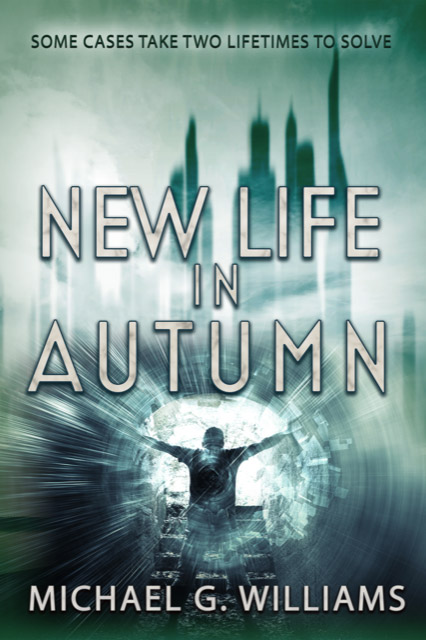
THE HARDEST PART OF DYING IS DECIDING HOW TO PASS THE TIME
Valerius Bakhoum died and kept no living. Now he can walk the streets of his city with a new face and a new name and finally feel a little bit respected. Too bad he’s still flat broke and behind on the rent. Unsure what to do with himself—and perhaps even of who he is—Valerius resumes his career as a detective by taking up the oldest case in his files: where do the children go?
Throughout his own youth on the streets of Autumn, last of the Great Flying Cities, Valerius knew his fellow runaways disappear from back alleys and other hiding places more than people realize. Street kids even have a myth to explain it: the Gotchas, who steal them away in the night. With nothing but time on his hands, Valerius dives in head-first to settle the question once and for all and runs smack into a more pressing mystery:
Who killed one of Valerius’ former lovers?
And do they know he’s still alive?
Return to the mean streets of Autumn by Valerius Bakhoum’s side as he shines a light into shadowy corners and finds secrets both sacred and profane with shockingly personal connections to who he was—and who he might become.
Warnings: This book does involve mild violence, capture and impending torture by antagonists, and discussion of the murder of children.
About the Series:
What would you do if you found yourself free at last–and all alone–in the sin-drenched paradise you were told you’d never reach?
Books of Autumn is a series telling the story of Valerius Bakhoum, a down and out private eye in Autumn, last of the great flying Cities, at various points in his life.
In A Fall in Autumn (2020 Manly Wade Wellman Award), we meet Valerius as he winds down his career and his too-short life.
In New Life in Autumn, Valerius navigates a surprising second chance and questions of who he is–and who he might become.
Walk the mean streets of Autumn by Valerius’ side in this award-winning study of the kindness and compassion found in the places where humanity’s lowest ambitions lurk!
Universal Buy Link
Amazon

Michael is giving away a $20 Amazon gift card with this tour:

That’s going to take some getting used to.
Anyway, widespread cultural insistence on bespoke offspring leaves a lot of kids out in the cold, literally. The ones I described before, orphaned by chance or abandoned for turning out imperfect or who got tired of their old life and decided to chase a new one are, in the remaining fourth-to-fifth of the City, as common as cobblestones and just as underfoot. There are plenty of them, and the supply continually refreshes, and I went to distinctly other streets than theirs. It isn’t that I wanted to avoid them, but talking would have taken money or some sort of barter and I was too short by half on either. I suspected it would have generated too much information rather than too little. A street kid asked to tell a story for a steam bun or a little reliably spendable scrip will gin up all the story you want and then some. I didn’t need urban legends. I needed facts, and that meant a much more gruesome start than some urchin milking my wallet with tall tales of what goes bump in the night.
I mentioned to Clodia one time that I had a friend who worked the Cisterns. The City of Autumn is like any town: its people have to piss like anybody else and its gutters often swell with rain. Autumn routinely flies into weather systems to gather up fresh water, and there’s a vast infrastructure to purify it for use by humankinds. I could spend ten pages telling you about the ponds in Down Preserves where rainwater burbles and bubbles under pressure, mixing in fresh air. The whole City sleeps atop a bed stuffed with pumps and gravity lines, charcoal and scrub algae, grates and artificial reefs and purpose-built shrimp—but I won’t.
Instead, I’ll simply say this: by the time water gets to us, the only thing left is the scent of the air where it first fell as rain. I don’t understand how the process works. I don’t care, either. The important thing, the thing none of us think about too much in case it, too, is another pretty lie in the quilt of them we make over our lives, is it happens. Sip from Lotta’s to remember the dead, cup your hands in the fountains of Domino, turn on a tap in the average Autumn kitchen, and you’ll enjoy the aroma of a field somewhere in Afrique, or a mutant blossom somewhere on a nameless plain in the vast Recovery Zone between Big River and the Salt Flat.
But on the other end of the system? Once all that delicious water has run its course through bodies and beer kegs and ice machines and steam plants?
That’s called Cistern Intake. I knew a gal who worked that part of the system. You could smell it on her from ten meters away. I always felt sorry for her, because it was so baked into her skin, ground down into her pores, she didn’t even smell it anymore herself.
On the plus side, she always had plenty of room in a bar. Nobody crowded her for long.
Frankie was a Mannie. Generally speaking, no variety of Plus—nice, “normal” people with designer genes—would even be considered for her job. Even applying for it might result in getting a replication error assessment. Odds are good you’ve already heard the story from a few years ago about the PlusPlus whose big ideas on “lived egalitarianism” got her carted off for genotoxicity screening. What most folks don’t know, however, is it was a stunt on both sides. Sure, she only wanted to make a point by suing the City for the right to join a scrubber team, not actually take the job if they offered it. But the City went out of its way to make the counterpoint in response, escorting her kicking and screaming away from the workhouse where they keep the little gliders they use to clean the Fore Barrier’s external face.
I assume she hoped to drum up publicity for her so-called perverse beliefs. I think she expected the City would do something to make an example of her, sure, but something more symbolic. You know, a big fine she could never pay, or maybe a few nights in the Palace of Imperial Justice. Something Imperial media could print without making anybody lose their lunch.
Instead, they dragged her —did I mention the kicking and screaming?—straight to the Hive. No trial. No judge. No pretenses. The Hive is right there at the front of the City, and the tiny portion of it sticking out above street level is visible if you climb high enough in Down Preserves and look to the Fore. The joke goes, they put the City’s worst criminals out there so we’ll hear them screaming if we crash into anything. This lady’s worst crime, though, was trying to prove we’re not all equal, not in the lives we’re allowed to lead or the risks we’re expected to take in the course of them. It sounds like heroism to you or me, but to the powers that be, the Sinceres, the Spiralists, and all the other people who don’t care if the Empire is a heap of shit as long as they’re near enough the top to catch a breeze, she’d committed the worst kind of social treason: she’d violated the spoken and unspoken rules propping up the class system on which they relied.

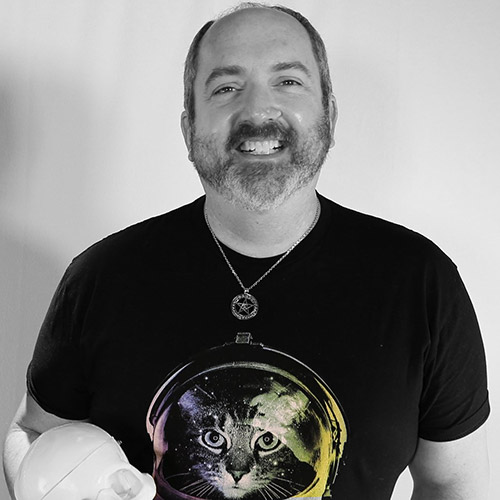
Michael will be the Guest of Honor at Ret-Con in 2023, co-hosts Arcane Carolinas, studies Appalachian history and folklore at Appalachian State University, and is a brother in St. Anthony Hall. He lives in Durham, NC, with his husband, a variety of animals, and more and better friends than he probably deserves.
Author Website: https://michaelgwilliamsbooks.com
Author Facebook (Personal): https://www.facebook.com/mcmanlypants
Author Facebook (Author Page): https://www.facebook.com/MichaelGWilliamsAuthor
Author Twitter: https://twitter.com/mcmanlypants
Author Instagram: https://instagram.com/mcmanlypants
Author Goodreads: https://www.goodreads.com/author/show/6429992.Michael_G_Williams
Author Liminal Fiction (LimFic.com): https://www.limfic.com/mbm-book-author/michael-g-williams/
Author Amazon: https://www.amazon.com/Michael-G-Williams/e/B001KIYBBU/